
Walk into almost any high-volume machine shop, and sooner or later you will run into the exact same heated debate.
In one corner, you have the procurement manager looking at a purchase order. They see an 8.5mm High-Speed Steel (HSS) twist drill priced at $6.50. Right underneath it on the quote is an equivalent 8.5mm solid carbide drill quoted at $58.00. The purchasing department immediately thinks: Why should we pay nearly nine times more for a piece of tooling that cuts the exact same hole diameter?
In the other corner stands the shop floor supervisor or tooling engineer. They have been running spindles for twenty years, their fingers smell of water-soluble coolant, and they are practically begging for the solid carbide drill. They know that forcing a CNC machining center to cut with HSS tooling is practically throwing profit down the swarf conveyor through sluggish cycle times, constant tool resets, and unpredictable drill breakage.
This clash happens every single week across the manufacturing sector. When shops obsess solely over invoice price instead of running an accurate solid carbide drill vs hss roi analysis, they fall straight into the sticker price trap. In repetitive production environments, consumable tool purchases usually account for barely 3% to 5% of overall manufacturing costs. Meanwhile, machine spindle burden, shop labor, scrap rates, and lost capacity make up more than 70%.
If your facility punches thousands of holes every shift, focusing on catalog price rather than true cost per hole drilling silently drains your operating margins. Let us walk through the cold numbers, spindle physics, and shop-floor economics behind this toolroom decision.
Focusing only on the initial purchase order when outfitting a CNC cell is terrible business. If your team runs an old manual drill press in a maintenance corner making four bolt holes a week, by all means, stick with an HSS twist drill out of the discount cabinet. But if your team runs automated CNC machines, tooling invoice price means nothing compared to tool cost per finished component.
A tool that costs $7 and throttles an $110-per-hour CNC spindle is drastically more expensive than a premium $60 tool that allows that same machine to complete the operation in a fraction of the time.
To grasp real shop economics, you have to separate initial checkout price from operational tool expenses:
Initial Tool Outlay does NOT equal Tooling Cost per Component.
A standard HSS drill looks like a bargain at checkout. But once you clamp it in a 40-taper spindle, you have to throttle your surface footage way down. In standard alloy steels or stainless grades, an HSS cutter rarely survives speeds above 70 to 110 SFM (Surface Feet per Minute). Push it any harder, and thermal breakdown ruins the cutting margin in minutes.
By comparison, a modern solid carbide drill routinely blasts through standard steels at 280 to 450 SFM, often at two to three times the feed per revolution. That dramatic speed gap completely eliminates bottleneck operations on crowded production schedules.
| Operating Metric | High-Speed Steel (HSS) | Modern Solid Carbide Drill |
|---|---|---|
| Typical Surface Speed (4140 Steel) | 60 – 110 SFM | 260 – 480 SFM |
| Typical Feed Rate (8mm Diameter) | 0.003 – 0.005 IPR | 0.008 – 0.014 IPR |
| Thermal Hardness Threshold | Loses temper around 600°C | Retains hardness past 1000°C |
| Material Rigidity (Young’s Modulus) | ~210 GPa | ~580 – 650 GPa |
| Cycle Time (25mm Deep Blind Hole) | 18 – 28 seconds | 2.5 – 5.5 seconds |
| Spot Drilling Step Required? | Almost always required | Rarely needed (self-centering point) |
Looking at physical material properties, tungsten carbide has roughly three times the stiffness of high-speed tool steel. This structural rigidity allows a solid carbide drill to resist deflection under aggressive thrust loads. That means your operators can skip the spot drilling cycle entirely on hole depths up to 5xD, shaving extra seconds off every single part.


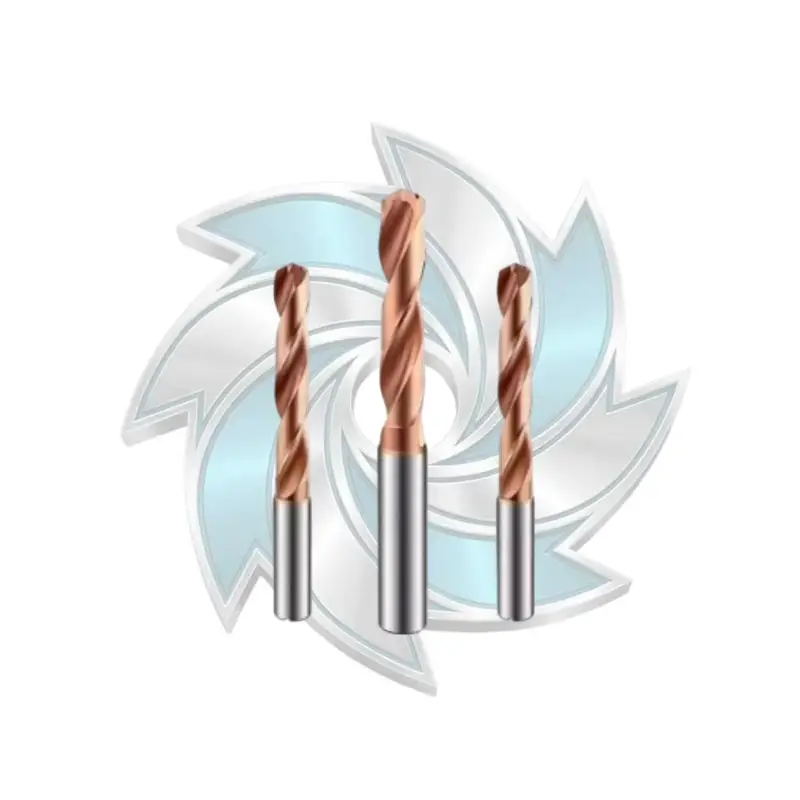
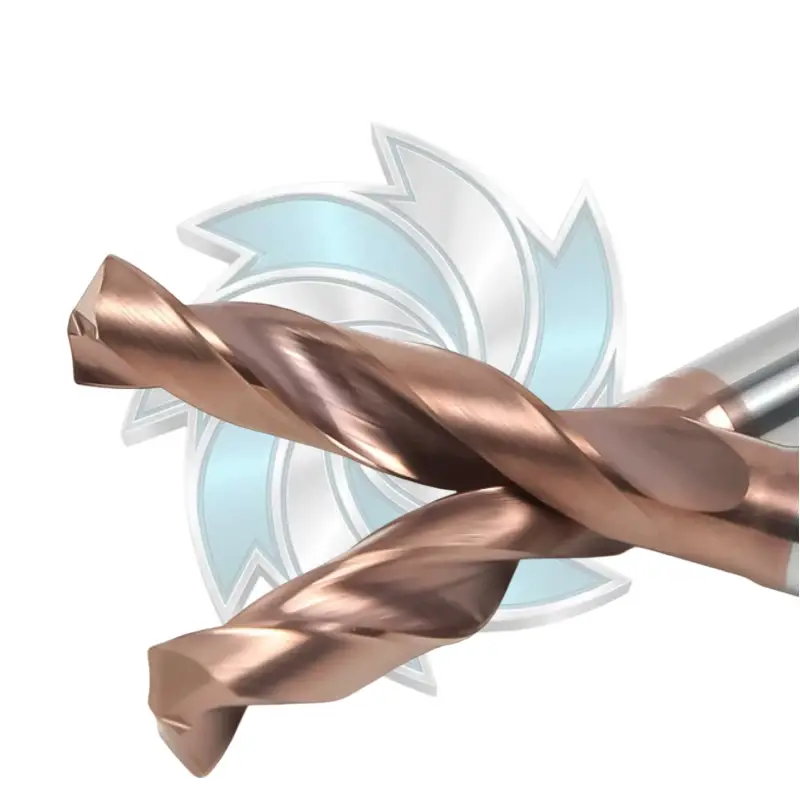
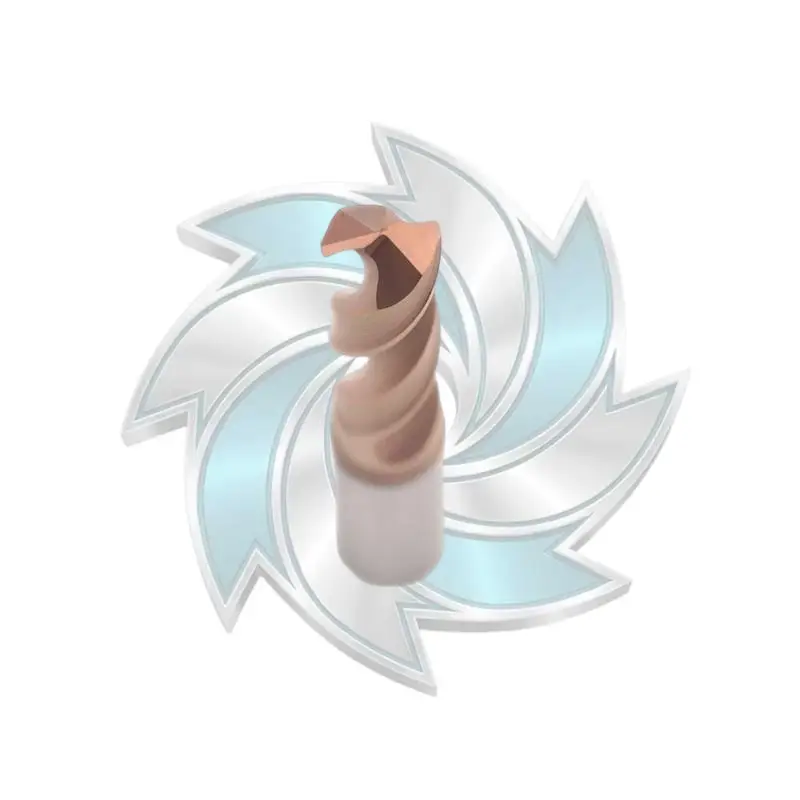
Engineered for precision CNC drilling, our high-performance carbide twist drills deliver exceptional dimensional accuracy across cast iron, structural steel, and stainless steel. Featuring a 140° self-centering point geometry and wear-resistant PVD coating, these industrial carbide twist drills significantly enhance tool life in volume production. Durable Mills supplies premium straight shank carbide twist drills designed to minimize cycle times and machine downtime.
To convince a finance director or purchasing officer to approve high-grade tooling, vague statements like “it cuts faster” will not work. You need to present hard math based on established manufacturing cost principles and classical Taylor tool life calculations.
Total cost per hole breaks down into three distinct operational elements: direct tool consumption cost, machine running cost, and tool change downtime cost.
Here is the exact formula to drop into your tooling cost calculation model:
Total Cost Per Hole = C_tool + C_machining + C_change
Breaking down the individual variables:
Let us look honestly at what these variables represent on a working production floor:
When you run real numbers through this framework, the pattern is unmistakable: direct purchase cost (C_tool) is almost negligible compared to the massive machine time (C_machining) and lost spindle hours (C_change) incurred while nursing slow tools.
Consider this real-world production run from a contract machining facility producing hydraulic manifold blocks out of 4140 pre-heat-treated alloy steel (28 to 32 HRC).
Initially, procurement insisted on buying imported cobalt HSS twist drills to keep purchase orders minimal. The production team ran the initial batch, recorded every second of spindle time, and compared it against an industrial-grade solid carbide drill.
Here is the verified production data from that run:
| Cost and Production Factor | Option A: Cobalt HSS Jobber Drill | Option B: High-Performance Solid Carbide Drill |
|---|---|---|
| Tool Purchase Price | $12.50 per unit | $68.00 per unit |
| Cutting Speed (SFM) | 65 SFM (630 RPM) | 310 SFM (3,000 RPM) |
| Feed Rate (IPR) | 0.0035 IPR (2.2 IPM) | 0.010 IPR (30.0 IPM) |
| Pre-Drill Spotting Step | Required (Spot drill cycle added) | None (Self-centering 140° split point) |
| Cycle Time Per Hole | 34.0 seconds (0.566 minutes) | 4.2 seconds (0.070 minutes) |
| Tool Life (Holes per Drill) | 180 holes before excessive wear | 1,600 holes before resharpening |
| Drills Needed for 20,000 Holes | 111 drills | 13 drills |
| Total Tool Purchase Expense | $1,387.50 | $884.00 |
| Total Machine Cutting Expense | $16,980.00 | $2,100.00 |
| Tool Change Labor/Downtime | $1,387.50 (111 swaps @ 8 mins) | $156.00 (13 swaps @ 8 mins) |
| Total Cost for 20,000 Holes | $19,755.00 | $3,140.00 |
| Net Cost Per Finished Hole | $0.988 per hole | $0.157 per hole |
The accounting department was stunned by the bottom line.
Even though the solid carbide drill was more than five times higher in initial purchase cost, running it saved the company $16,615.00 across the production run.
Why did the numbers swing so aggressively?
First, because HSS wore out so rapidly in tough 4140 steel, the shop actually had to spend more total money buying replacement HSS bits than purchasing the solid carbide drill units.
Second, the solid carbide drill collapsed the hole cutting cycle from 34 seconds down to just 4.2 seconds. That single adjustment liberated nearly 165 hours of open spindle time on that machining center. The shop turned around and sold that newly opened capacity to another customer without purchasing new machinery or running overtime shifts.
That is what true solid carbide drill vs hss roi looks like on a working shop balance sheet.
A solid carbide drill is not a magic wand for every cutting task. Anyone telling you to discard every HSS tool in your crib does not spend enough time out on the floor.
There are distinct situations where high-speed steel remains the practical, cost-effective choice:
Tungsten carbide provides tremendous hardness, but its fracture toughness is naturally lower than tool steel. If your spindle has worn bearings, sloppy table gibs, or excessive radial runout (TIR over 0.001 inches), an aggressive solid carbide drill will likely micro-chip its corners within a dozen holes. HSS has mechanical elasticity; it can twist, flex, and survive vibration that would instantly shatter carbide into fragments.
If you are drilling through cross-drilled cavities, slag inclusions, or rough flame-cut plates with extreme surface scale, HSS tool bodies absorb mechanical shocks far better. Running a solid carbide drill through unpredictable interruptions requires rigid fixturing, specialized edge honing, and controlled feed reduction routines.
If your job shop needs to cut three holes in a low-carbon steel plate for a one-off assembly fixture, buying a dedicated solid carbide drill is financial nonsense. You might save twenty seconds of machine time on the entire part, which will never compensate for the higher upfront purchase price.
However, the moment your operators set up recurring jobs or cycle thousands of holes, sticking with HSS stops being conservative purchasing and starts acting as an active drag on profitability.


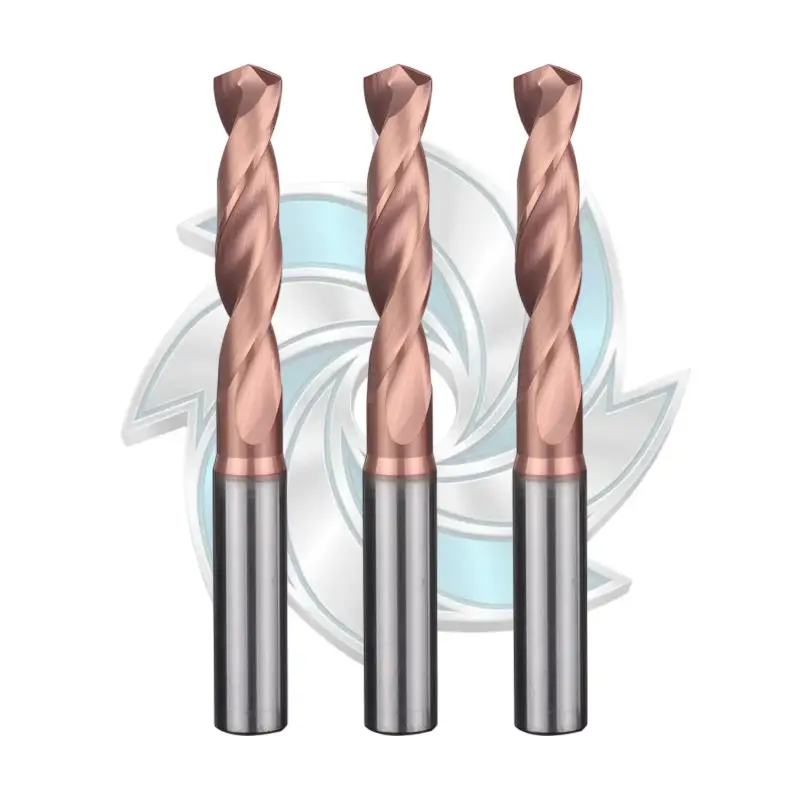
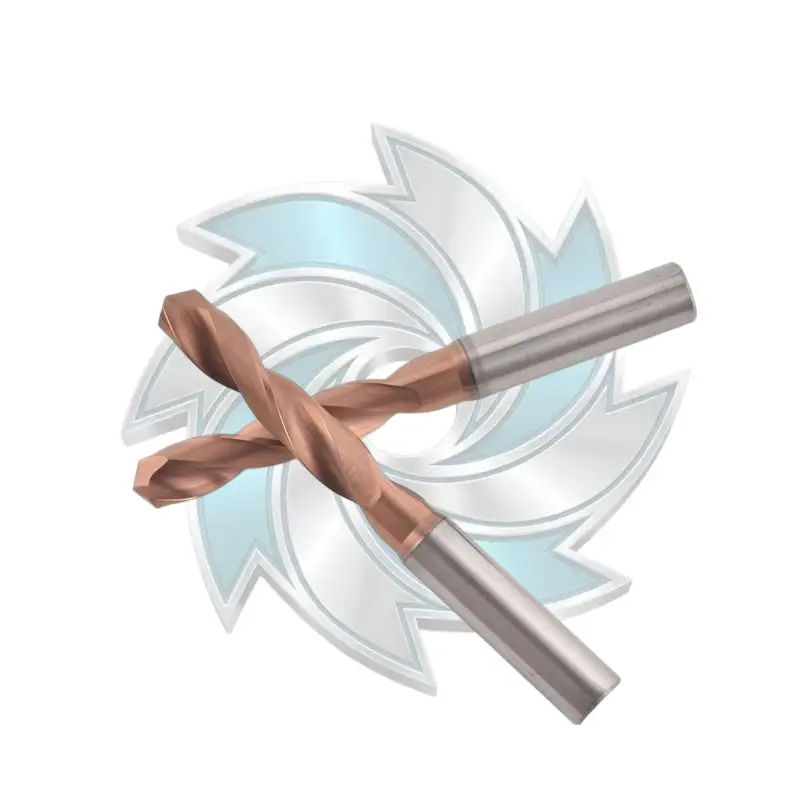
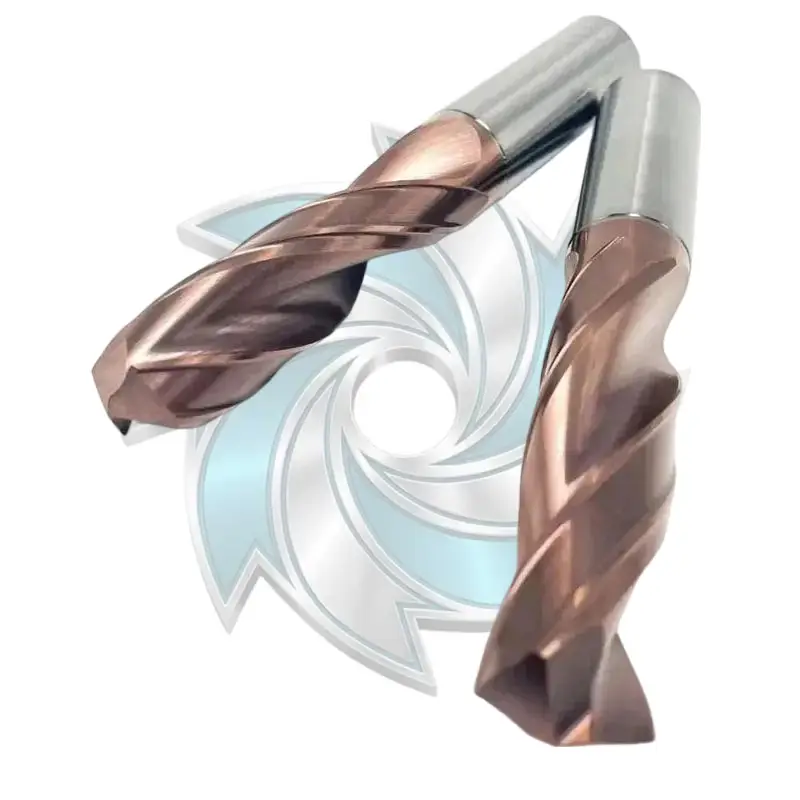
The 5D carbide drill by Durable Mills delivers exceptional centering accuracy and tool rigidity across demanding drilling operations. Engineered for cast iron, stainless steel, and alloy steels, this 5D carbide drill optimizes chip evacuation and heat resistance to increase CNC throughput. Choose our high-precision 5D carbide drill bits for stable hole tolerances and extended production runs.
Grabbing any random solid carbide drill off a supply shelf does not guarantee peak efficiency. Tool geometry, cutting fluid delivery, and surface metallurgy dictate real-world success:
Standard external flood nozzles struggle to wash fluid down deep holes once cutting depth passes 3x tool diameter. The intense heat at the drill margin turns coolant into steam before it ever reaches the chisel edge, triggering thermal shock fractures.
A through-coolant solid carbide drill forces cutting fluid directly through internal micro-channels straight to the cutting lips under 300 to 1,000+ PSI. This fluid velocity blasts hot chips up through the flutes and out of the bore, eliminating peck drilling cycles altogether. Stripping the peck cycle out of your CNC program frequently cuts 30% to 50% of the hole drilling duration.
While uncoated tools work fine in non-ferrous aluminum alloys, cutting abrasive carbon steels, stainless grades, or tough high-temperature alloys demands engineered PVD coatings:
For facilities handling varied job shop work, standardizing on versatile families like Standard Twist Drills keeps tooling bins organized without tying up capital in overly specialized geometries.
Here is a common failure point seen in machine shops: a company spends good money on a premium solid carbide drill, mounts it in an old, scored ER collet chuck with 0.0014″ runout, and wonders why the cutting edges chip after fifty parts.
Carbide demands concentricity. When a drill runs out of true, one cutting lip takes 80% of the chip load while the other lip rubs against the hole wall. That uneven loading produces oversized holes, rough surface finishes, bell-mouthed entries, and premature cutting lip breakdown.
To get the full financial return out of your solid carbide drill tooling, follow these setup rules:
For plant managers and purchasing directors, tooling sourcing strategy matters just as much as feeds and speeds. If your plant buys individual drills one by one through retail industrial distributors, catalog markups quickly wipe out your hard-earned machining savings.
When managing high-volume, recurring production programs, ordering wholesale drill bits directly from specialized manufacturers changes the cost equation entirely:
If you want to transition an active production line from HSS to high-performance solid carbide drill tooling, here is a practical roadmap to get buy-in across your organization:
Walk the floor and identify parts with long holemaking cycles. Look for machines where drills spend multiple minutes in the cut or where operators regularly pause production to clear tangled chip nests. Those are your highest-return opportunities.
Inspect your machine’s spindle condition, runout, and coolant pressure. Does the spindle have internal high-pressure coolant capability? If so, select an internal-coolant solid carbide drill right away. If only external flood is available, pick an optimized solid carbide drill with polished flutes to aid chip ejection.
Avoid overhauling your entire tooling lineup in a single afternoon. Pick one challenging part. Run 500 holes using your existing HSS setup, carefully recording total cycle duration, tool wear offsets, and operator intervention frequency. Then, load the equivalent high-performance solid carbide drill, adjust speeds and feeds to recommended parameters, and run the same 500 holes.
When presenting your results to shop executives, skip the deep dive into cutting physics. Focus strictly on financial metrics:
Executive teams might not fully grasp chip load thinning or rake angles. But when you prove that spending $500 more on quality tooling unlocks $7,000 in open machine time, purchase order approvals happen quickly.


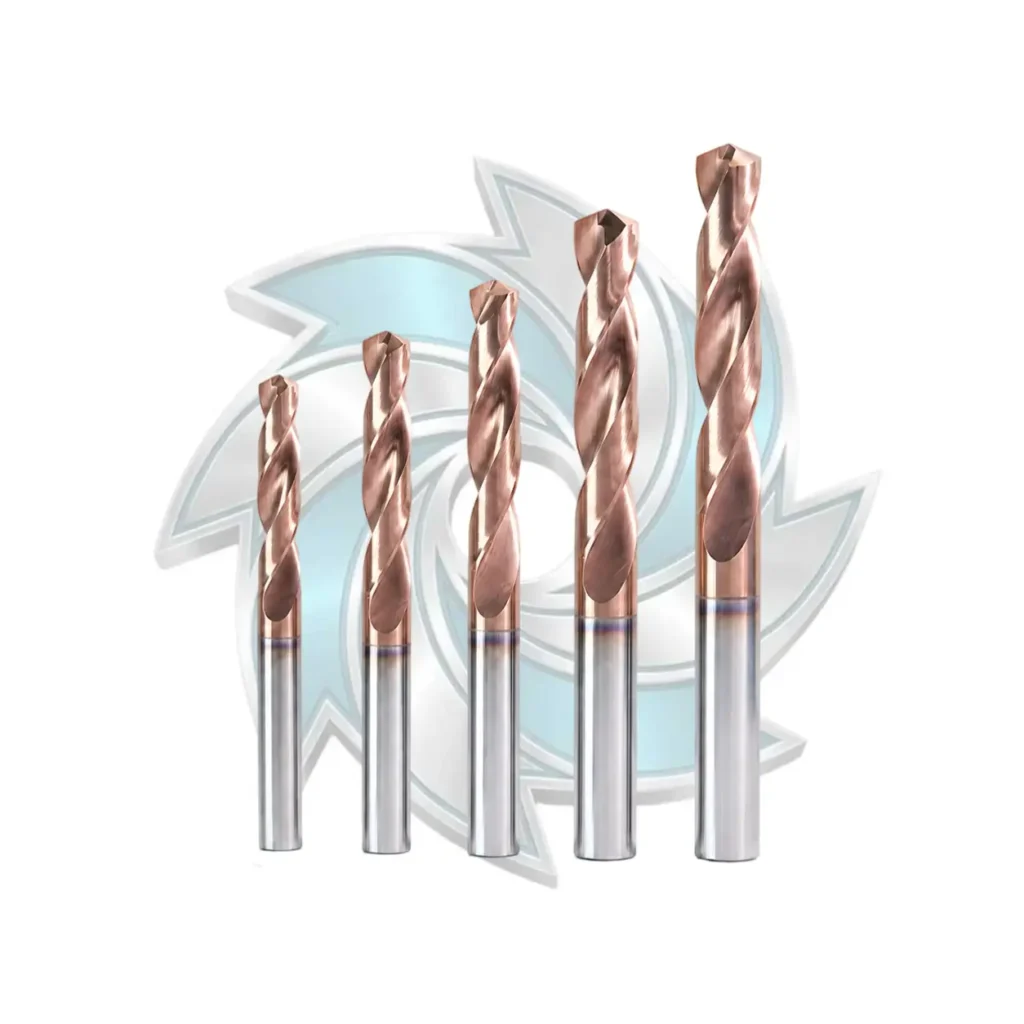
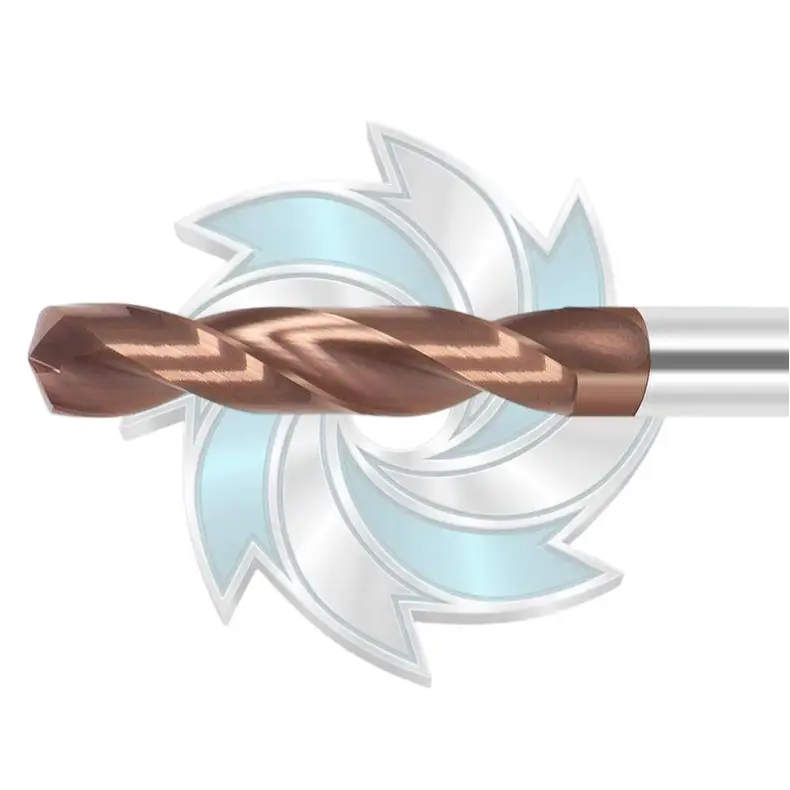
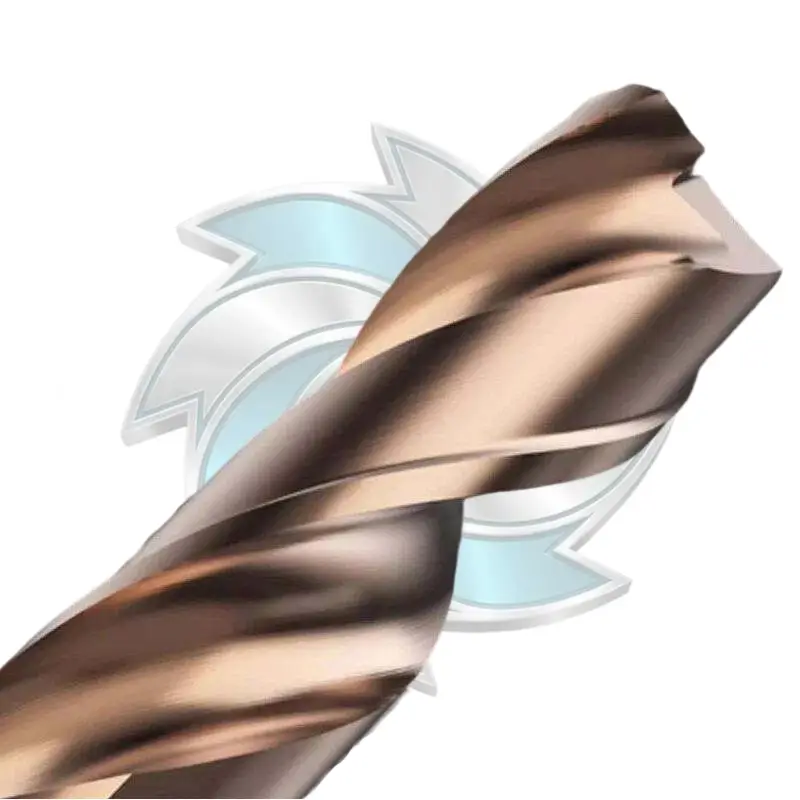
Engineered for high-efficiency holemaking, our solid carbide drill delivers exceptional centering precision across alloy steel and cast iron. This premium solid carbide drill bit features external cooling and an m7 tolerance for smooth chip flow. Choose our solid carbide drills for rigid, high-speed CNC drilling operations.
The primary reason a solid carbide drill breaks early is excessive spindle or toolholder runout combined with chatter. While an HSS bit flexes and forgives sloppy toolholders or worn machine ways, carbide is rigid and will chip along its cutting edges if runout exceeds 0.0005 inches. Inadequate chip evacuation causing chips to pack in the flutes is another leading cause of catastrophic breakage.
Yes. A well-designed solid carbide drill can typically be reground and recoated 2 to 4 times, provided it is removed before severe flank breakdown occurs. A professionally reconditioned solid carbide drill usually provides 90% to 95% of new tool life at roughly one-third of the replacement cost, significantly boosting your long-term cost per hole drilling metrics.
In automated CNC machining, the financial breakeven point often arrives after just 100 to 200 holes. Because a solid carbide drill reduces cycle times by 60% to 80%, the machine operating savings (at typical shop burden rates of $80 to $140 per hour) quickly offset the tool purchase price difference after only an hour or two of spindle run time.
No, but it significantly expands your operating envelope. You can run an external-coolant solid carbide drill successfully on shallow holes (up to 3x diameter) in easy-to-machine materials like aluminum or mild steel. For deeper holes, gummy stainless steels, or high-temperature alloys, high-pressure through-spindle coolant is critical for flushing chips and preventing thermal shock.
Cutting tool choices should never be based on guesswork or catalog sticker prices. If your production lines are losing billable spindle hours to slow HSS drilling passes, frequent tool changeovers, and unpredictable hole finishes, it is time to upgrade your cutting line.
At Durable Mills, we engineer high-performance solid carbide drills, end mills, and specialized round cutting tools built to handle the punishment of continuous production machining. By combining ultra-fine sub-micron carbide grades with wear-resistant PVD coatings, our tooling helps production shops lower cycle times, hold tighter tolerances, and hit the lowest cost-per-hole on every shift.
Ready to see how the numbers work out on your own production floor?
Connect with our engineering applications team today. Send us your component material specs, hole dimensions, and production run quantities. We will help you calculate your precise solid carbide drill vs hss roi, provide optimized cutting parameters, and quote direct-factory volume pricing on our complete range of wholesale drill bits.


