
If you spend your days around CNC machining centers, you already know the sinking feeling of hearing a high-pitched squeal right before an expensive drill snaps off deep inside a 316 stainless billet. Spindle downtime eats shop margins faster than scrap metal, and most of that headache comes down to one issue: heat build-up and chips packing in the flutes.
Flood coolant simply cannot reach the cutting interface once you drill deeper than two or three times the diameter (3xD). That is why any modern machine shop running production jobs needs an internal coolant carbide drill. But when you look at typical catalog pricing from the big tooling conglomerates, those retail list prices can wipe out your margin on high-volume quotes.
Finding reliable, high-performance coolant through drill bits at wholesale prices changes the math entirely. This guide breaks down the real mechanics, geometry, substrate metallurgy, and shop economics of sourcing a wholesale internal coolant carbide drill batch directly from a dedicated manufacturer like Durable Mills, so you can stop burning money on brand markups and dramatically slash your tooling cost per hole.
Machinists have tried to force flood coolant into deep holes for decades using peck drilling routines. You feed in, retract all the way out to flush the chips, and dive back in. It works on loose-tolerance prototypes, but on a 500-part production batch, pecking is absolute murder on cycle times and tool life.
Every time the tool retracts, it rubs against the work-hardened surface of the hole wall. In materials like 304 stainless, duplex, or Inconel, that work hardening ruins cutting edges within dozens of parts. Moreover, external coolant streams hit the spinning outer flutes and bounce right off due to centrifugal force, leaving the chisel edge starving for lubrication.
Machinist’s Reality Check: When drilling 5xD or 8xD without internal channels, the drill tip reaches temperatures past 800°C. Flood coolant vaporizes instantly into an insulating steam pocket before it ever touches the chisel edge. The tool cooks, chips bind in the flutes, and the drill shears.
An internal coolant carbide drill solves this cleanly. By routing pressurized cutting fluid through micro-channels straight to the drill’s rake faces, cutting fluid lubricates the contact zone continuously. The fluid hydraulic pressure acts like an ejection piston, shooting chips up the flutes and clear of the hole.
With an internal coolant carbide drill, peck drilling becomes obsolete for holes up to 8xD or even 12xD in standard steels. You run a single, continuous feed move. Your spindle uptime climbs, hole straightness improves, and your cycle times drop by 40% to 70%.
Not every drill with two coolant holes drilled through the shank is worth buying. When evaluating a wholesale internal coolant carbide drill, you have to look beneath the surface finish to the grain structure, channel geometry, and grind quality.
Coolant Fluid Dynamics Profile:
High-Pressure Pump (20 to 70 bar) → Machine Spindle Rotary Union → Toolholder Shank → Twin Helical Internal Channels → Tip Exit Orifices Behind Cutting Lips → Instant Chip Lift and Hydraulic Flushing
The foundation of any heavy-duty internal coolant carbide drill is its carbide rod. We look closely at grain size and cobalt binder percentage. Low-tier drills use recycled scrap powder with uneven binder distribution, leading to premature micro-fractures under heavy feed.
According to the ISO 513 standard for cutting tool materials, drills handling ISO P (steel) and ISO M (stainless) require an ultra-fine sub-micron grain size (between 0.5 and 0.8 microns) with a 10% to 12% cobalt content. This specific balance gives the internal coolant carbide drill the high hardness (around 92 to 93 HRA) needed to resist abrasive flank wear, combined with the transverse rupture strength (TRS > 4,000 MPa) required to withstand torsional shock when breaking through an exit hole.
You will see two common internal duct styles on the market:
A conventional drill without proper web thinning creates a wide chisel edge that rubs and pushes material rather than cutting it. That creates enormous thrust force, pushing your CNC z-axis servo load over 60%.
A high-grade internal coolant carbide drill utilizes a split point or 4-facet self-centering point geometry (often conforming to DIN 6537 dimensions). This geometry reduces initial thrust loads by over 30%, prevents drill walking on un-spotted raw surfaces, and allows coolant to flow unrestricted right past the drill center.
Carbide hates thermal shock. If coolant flow fluctuates, an uncoated carbide edge will micro-crack and flake off within minutes. An industrial-grade internal coolant carbide drill requires physical vapor deposition (PVD) coatings built for heat and friction:
If you are drilling sticky non-ferrous aluminum alloys, a polished, uncoated flute or a DLC (diamond-like carbon) coated internal coolant carbide drill prevents chip welding better than titanium-based coatings.
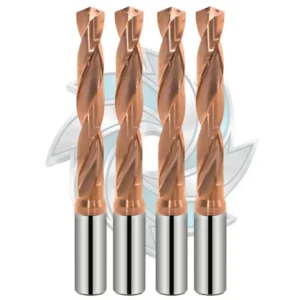


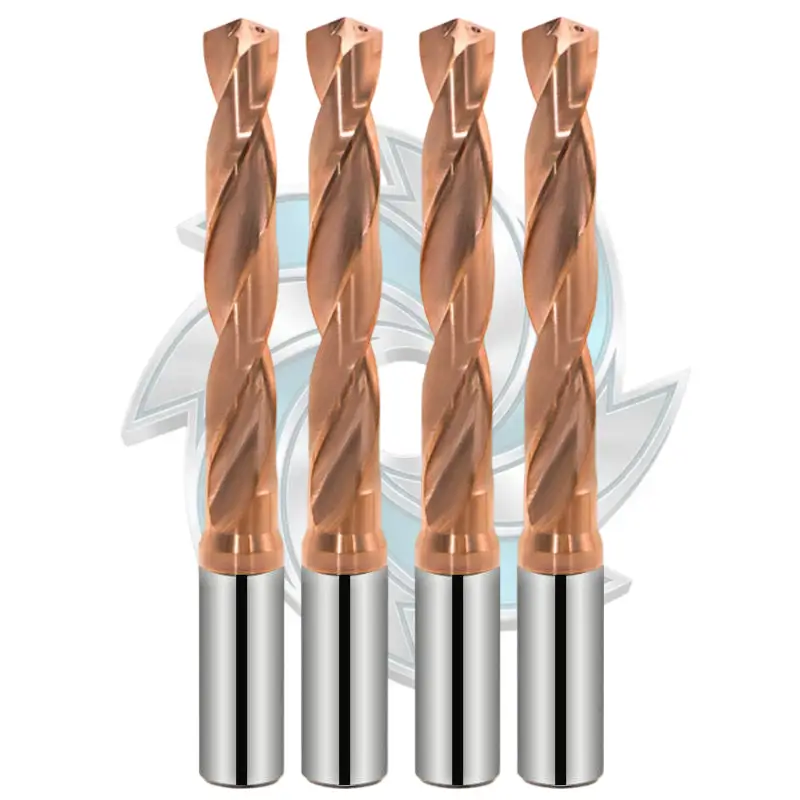

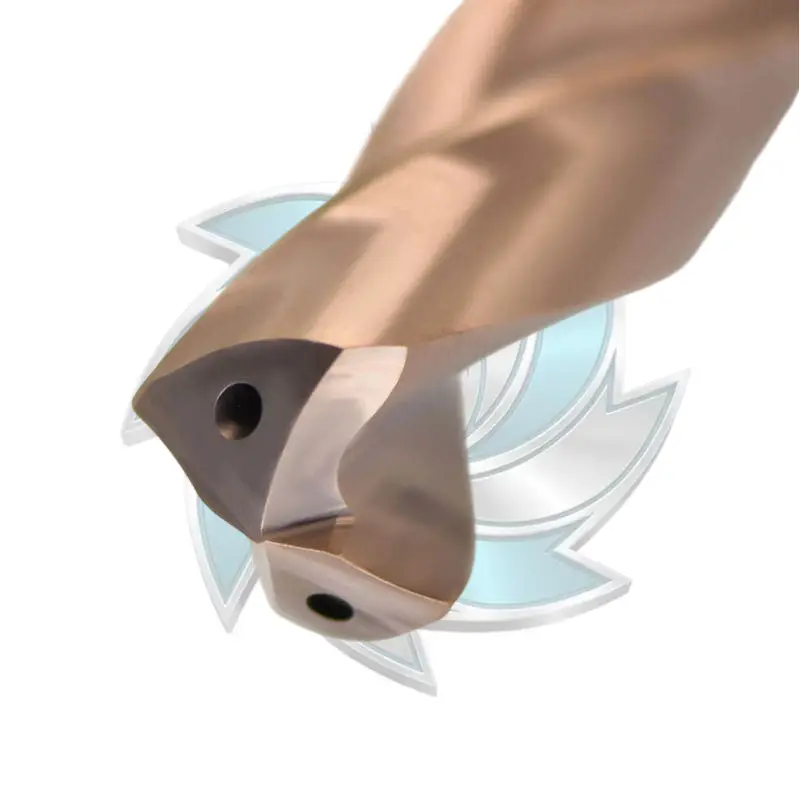
The internal coolant carbide drill delivers superior penetration rates and high-feed reliability in deep-hole CNC operations. Equipped with dual internal fluid channels, this internal coolant carbide drill rapidly dissipates cutting heat while flushing chips efficiently. Durable Mills manufactures high-precision internal coolant carbide drills tailored for stainless steel and cast iron machining.
Most CNC shop managers get trapped looking strictly at the purchase invoice price of a drill rather than measuring the tooling cost per hole. But purchasing from major multinational tooling catalogs comes with an enormous markup—often 200% to 400% higher than actual manufacturing costs—to fund extensive dealer networks, glossy print catalogs, and corporate overhead.
Let us look at the true formula for cutting cost per hole on a production run:
Production Cost-Per-Hole Formula:
Cost Per Hole = (Tool Purchase Price / Total Holes Produced in Tool Life) + (Cycle Time in Seconds / 3600 × Spindle Hourly Rate)
Let us plug in real, everyday production numbers to see how choosing a direct wholesale internal coolant carbide drill transforms your profit margins.
| Cost Metric | Big-Brand Catalog Drill | Wholesale Internal Coolant Carbide Drill (Durable Mills) |
|---|---|---|
| Tool Purchase Price | $145.00 | $38.00 |
| Tool Life (Holes per grind) | 1,200 holes | 1,150 holes |
| Regrinds Possible | 2 times (adds $50 total) | 2 times (adds $30 total) |
| Total Hole Output | 3,600 holes | 3,450 holes |
| Tool Cost per Hole | $0.054 | $0.019 |
| Cycle Time per Hole | 4.8 seconds | 4.9 seconds |
| Spindle Rate ($90/hr) | $0.120 per hole | $0.122 per hole |
| Total Machining Cost Per Hole | $0.174 | $0.141 |
| Total Cost for 50,000 Holes | $8,700 | $7,050 |
By switching to a factory-direct coolant through carbide drill, this single production cell saves $1,650 on tooling costs alone across a 50,000-hole run. That is direct profit back to the shop without sacrificing cycle time, hole tolerances, or surface finish.
When you order in bulk batches (20, 50, or 100 units), you insulate your machine shop against unexpected supply chain delays while locking in stable volume pricing that protects your bid margins on annual client contracts.
A mid-sized hydraulic valve manufacturer in the Midwest was running manifold blocks made from annealed 304 stainless steel. Each block required sixteen 6.8mm holes drilled to a depth of 35mm (approx 5.1xD) before tapping M8x1.25 threads.
The shop was running a standard solid carbide jobber drill using external flood coolant at 6 bar (87 psi). Because of severe chip binding, the programmer had to use a peck drilling cycle (G83) with 1.5mm peck steps.
The chips were stringy and bird-nested around the tool shank, forcing the operator to pause the machine every three cycles to clear chips by hand. The drill produced an average of 180 holes before the cutting margins broke down from work-hardening friction.
The shop transitioned to a wholesale internal coolant carbide drill batch from Durable Mills featuring a 30-degree helical through-coolant channel and an AlCrN coating. They coupled the tool into a hydraulic chuck on their Doosan machining center with 25 bar (362 psi) coolant through the spindle.
| Operation Parameter | Previous Method (Flood Coolant) | Upgraded Method (Internal Coolant Carbide Drill) |
|---|---|---|
| Cycle Type | G83 Deep Peck Drilling (1.5mm steps) | G73 High-Speed Direct Infeed (Single Pass) |
| Cutting Speed (Vc) | 45 m/min | 75 m/min |
| Feed per Rev (fn) | 0.07 mm/rev | 0.12 mm/rev |
| Cycle Time per Hole | 28 seconds | 4.2 seconds |
| Holes per Tool Life | 180 holes | 820 holes |
The shop cut their total tooling budget on that component line by 62% while freeing up roughly 14 hours of machine spindle capacity each week.
Simply buying a top-tier internal coolant carbide drill is not enough. If your machine tool’s fluid delivery or toolholding setup is sloppy, you will break drills and blame the supplier.
The diameter of the drill dictates the pressure you need. Smaller drills have microscopic internal orifices, meaning your coolant pump must generate much higher pressure to push sufficient fluid volume through the tip:
If your machine only has standard 5 bar flood coolant, an internal coolant carbide drill will still provide minor edge cooling, but it will not generate the hydrodynamic velocity needed to eject chips out of deep holes. If you are stuck with lower pressures, reduce your drilling depth ratios to 3xD or choose tools with wider flute troughs.
Do not run dirty coolant through your through-coolant tooling. Coolant channels on small-diameter drills can be as narrow as 0.3mm. A stray aluminum chip or grinding grit sucked up from the tank will plug one channel.
Once one channel clogs, uneven hydraulic pressure and thermal deflection will snap the internal coolant carbide drill almost instantly. Your coolant sump should have a filtration bag system rated to at least 20 microns (or 5 microns when running tools under 4mm diameter).
Carbide has phenomenal compressive strength, but zero tolerance for bending moments. If your toolholder has excessive radial runout, one cutting lip takes 80% of the chip load while the other rubs.
Dialing in cutting data for an internal coolant carbide drill differs drastically from traditional drilling. Because the cutting edge stays lubricated and cool, you run substantially higher surface speeds (Vc) and aggressive feed rates (fn).
If you feed an internal coolant carbide drill too slowly, the chisel edge rubs against the material rather than biting into it. That creates tool-killing friction and work hardening. Use the baseline parameters below to start dialing in your setup:
| Material Group | Common Alloys | Cutting Speed Vc (m/min) | Feed fn (mm/rev) for Ø6mm | Feed fn (mm/rev) for Ø10mm | Recommended Coating |
|---|---|---|---|---|---|
| ISO P (Carbon/Alloy Steel) | 1045, 4140, 4340 | 90 – 130 | 0.12 – 0.18 | 0.20 – 0.28 | AlTiN / TiAlSiN |
| ISO M (Stainless Steel) | 304, 316, 17-4PH | 55 – 85 | 0.08 – 0.13 | 0.14 – 0.20 | AlCrN |
| ISO K (Cast Iron) | Grey Cast, Ductile Iron | 100 – 160 | 0.16 – 0.24 | 0.24 – 0.35 | AlTiN |
| ISO N (Aluminum Alloys) | 6061-T6, 7075 | 180 – 320 | 0.18 – 0.28 | 0.28 – 0.45 | Bright Polished / DLC |
| ISO S (High-Temp Alloys) | Inconel 718, Ti-6Al-4V | 25 – 45 | 0.05 – 0.09 | 0.09 – 0.14 | AlCrN / Nano-Composite |
To calculate your exact CNC spindle speed and table feed rate, use these universal formulas:
Cutting Speed Formula (Vc):
Vc = (π × D × n) / 1000
(Where Vc is cutting speed in m/min, D is drill diameter in mm, and n is spindle RPM)
Spindle Speed Formula (n):
n = (Vc × 1000) / (π × D)
Table Feed Speed / Penetration Rate (Vf):
Vf = n × fn
(Where Vf is table feed in mm/min, and fn is feed per revolution in mm/rev)
For advanced cutting speed and feed adjustments tailored to non-standard workpiece hardness or deep 8xD/12xD applications, engineers can reference the interactive calculators on Machining Doctor or cross-check baseline tool parameters using Sandvik Coromant’s drilling technical guide and material specifications via ASM International.
Buying an internal coolant carbide drill batch wholesale directly from an overseas or specialized domestic manufacturer saves substantial cash, but only if you vet the supplier properly. Poorly ground drills will cause massive scrap rates on your production line.
Here is the checklist your purchasing department and toolroom foreman should use when evaluating sample batches from any new wholesale CNC tooling supplier:
Working with an experienced manufacturer like Durable Mills eliminates these risks. Every batch of our internal coolant carbide drill line undergoes optical coordinate measuring machine (CMM) verification and multi-axis concentricity testing before packaging.


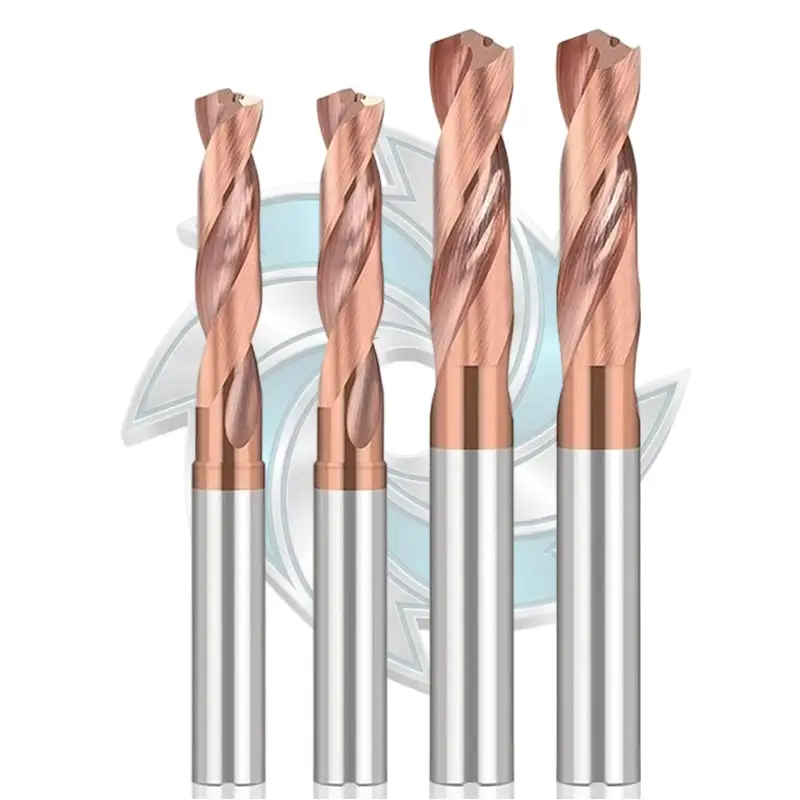
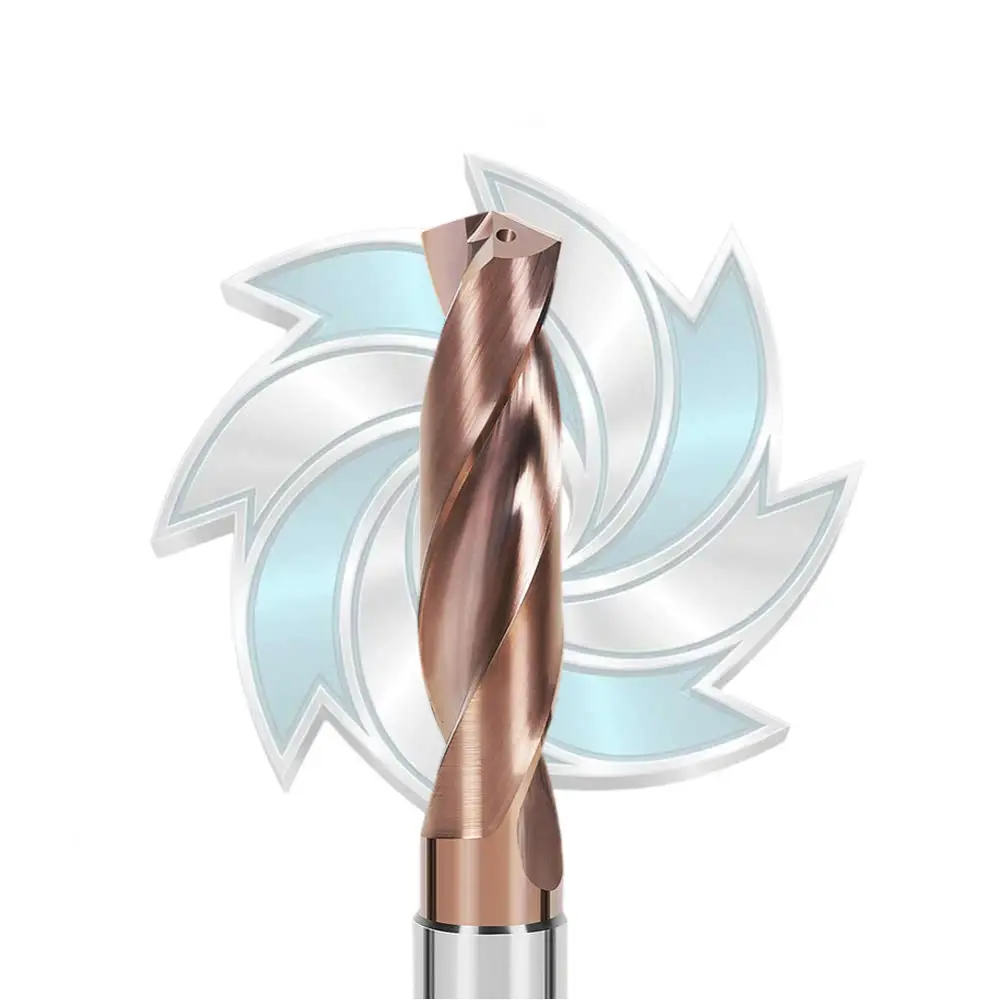
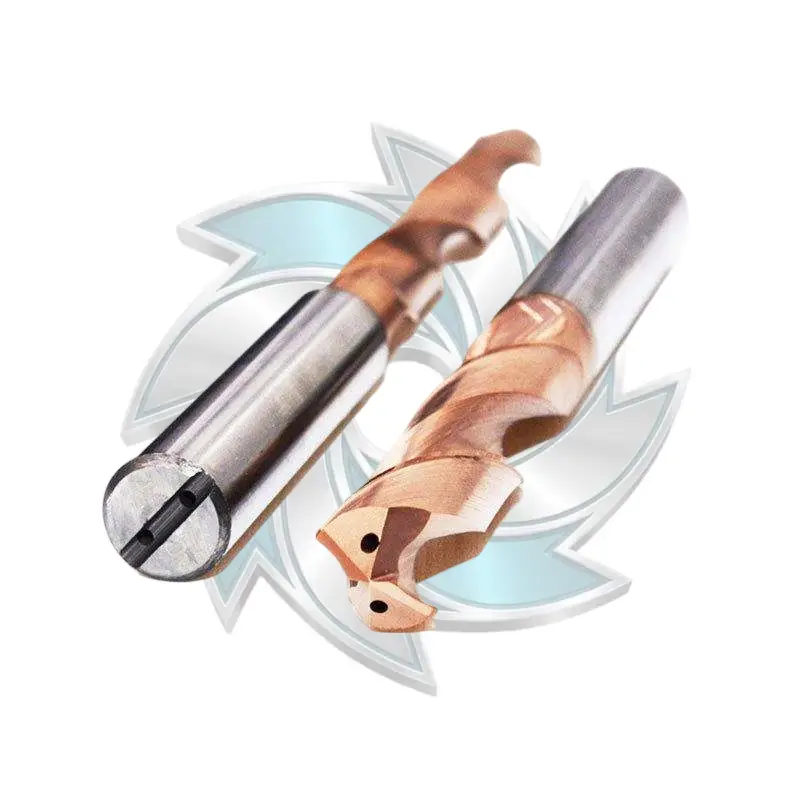
Engineered for precision metalworking, this high-performance coolant through carbide drill delivers superior heat dissipation and chip evacuation in deep-hole operations. Manufactured by Durable Mills, our solid carbide drills ensure exceptional surface finishes across stainless steel, alloy steel, and cast iron. Upgrade your CNC production line with reliable coolant-fed carbide drill tooling built for long service life.
Even with an exceptional internal coolant carbide drill, machining real-world castings and forgings can throw curveballs. Keep this quick troubleshooting table posted near your CNC control panels:
| Symptom on Machine | Probable Root Cause | Shop Floor Action Step |
|---|---|---|
| Chipped Outer Margins | Excessive spindle runout (>0.008mm) or machine vibration. | Switch from ER collet to hydraulic chuck; inspect spindle taper. |
| Chipped Chisel Center | Entering an uneven casting surface without spot drilling; feed rate too high upon initial contact. | Reduce feed by 50% for the first 1-2mm of entry, then ramp to 100%. |
| Chips Packing in Flutes | Coolant pressure too low or feed rate too slow (producing thin ribbon chips). | Increase feed per rev (fn) to curl chips tighter; inspect coolant pump filters. |
| Built-Up Edge (BUE) | Cutting temperature too low or coating incompatible with material. | Increase cutting speed (Vc) by 15-20%; confirm AlCrN coating for stainless. |
| Hole Oversized / Bell-Mouthed | Tool runout or severe drill deflection during entry. | Ensure drill point is ground symmetrical; verify clamping rigidity. |
| Drill Snaps Off Deep in Hole | Coolant channel clogged with swarf from previous cycle. | Install a 10-micron coolant filter; add an air/coolant blast blow-off routine. |
Technically yes, but it is not recommended for deep holes. If you do not supply pressurized coolant through the spindle, the internal holes simply sit empty. The drill will perform similarly to a standard solid carbide drill, but because the tool core has hollow channels, it is marginally less rigid than a solid drill. If you only have flood coolant, stick to drilling depths under 3xD and use peck drilling routines to evacuate chips.
For general steel drilling with an internal coolant carbide drill between 6mm and 12mm in diameter, a minimum pressure of 20 bar (approx 300 psi) is recommended. This provides sufficient fluid velocity to push curled chips back along the flutes. When working with stringy materials like 316L stainless or titanium, moving up to 40 to 70 bar (600 to 1,000 psi) improves chip breaking and drastically extends edge life.
Under normal wear conditions (flank wear under 0.2mm without catastrophic corner chipping), an industrial internal coolant carbide drill can typically be re-sharpened and re-coated 2 to 4 times. However, re-grinding requires a 5-axis CNC tool and cutter grinder capable of recreating the original split point and thinning geometry. If your wholesale purchase price is competitive enough, many high-volume shops find it more cost-effective to swap in a fresh drill to eliminate the logistical hassle and performance variability of third-party regrinds.
Chip packing usually points to one of two counterintuitive problems: feeding too slowly or inadequate coolant volume. If you feed an internal coolant carbide drill too lightly, the chip is too thin to curl and break against the flute wall, turning into a long, pliable ribbon that wraps around the tool. Increasing your feed rate by 20% to 30% often causes the chip to snap into crisp, manageable “C” shapes that eject cleanly. Also, ensure your machine tank’s intake filter isn’t starved, dropping fluid flow volume.
Tooling should be an asset that drives your shop’s profitability, not an unpredictable catalog expense that drains your per-part margin. If your machine operators are still babying tools with time-consuming peck cycles, or if your purchasing department is paying hundreds of dollars per drill to catalog distributors, it is time to rethink your tooling supply chain.
Durable Mills manufactures premium, high-precision coolant through carbide drill products engineered specifically for demanding CNC production environments. By using premium sub-micron carbide substrates, micro-finished flute geometry, and durable PVD coatings, our drills match or exceed the performance of tier-one global brands—at a fraction of the wholesale cost.
Ready to drop your machining cycle times and cut your tooling cost per hole?


